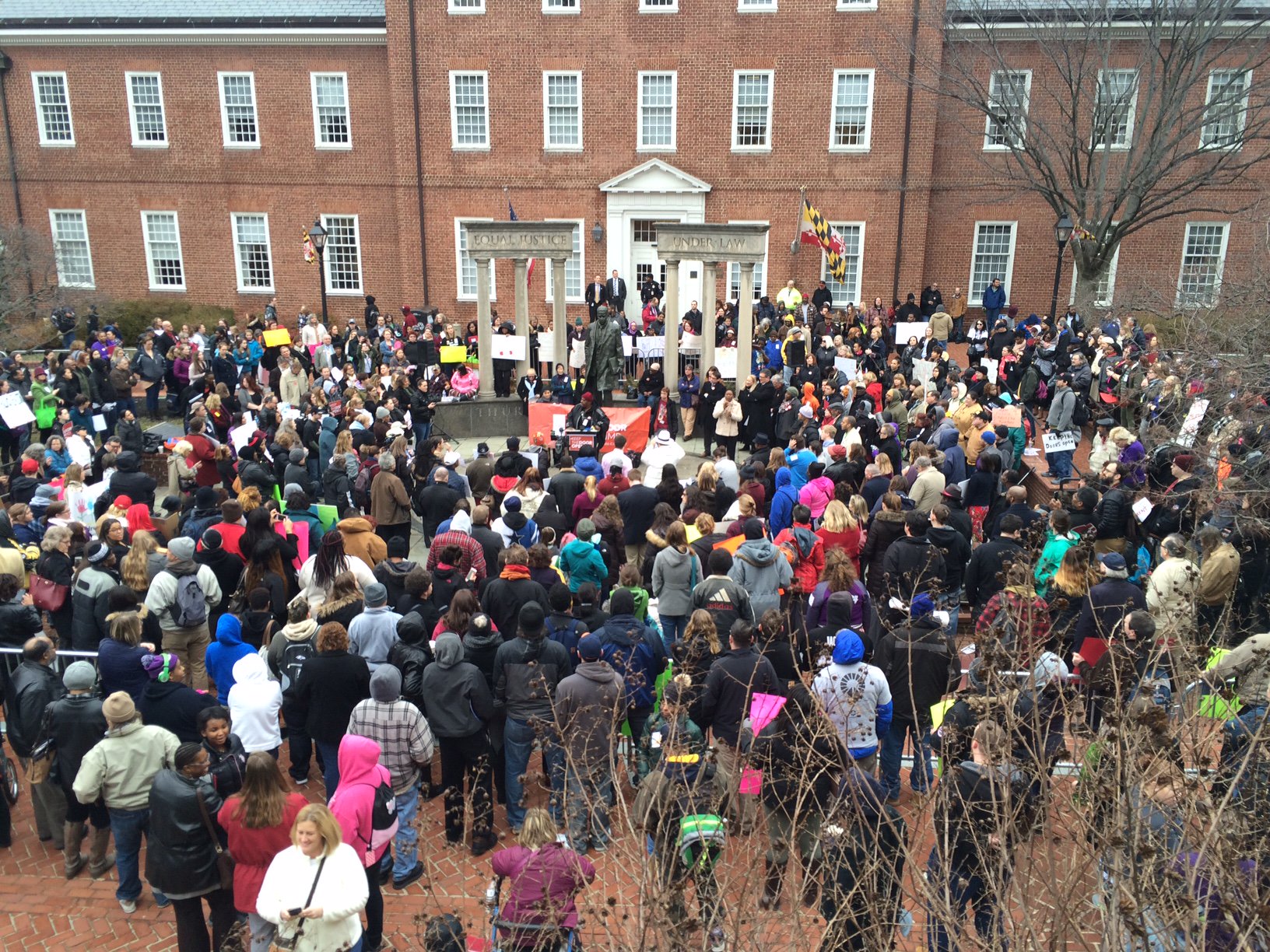
Hundreds rally on Lawyer’s Mall in Annapolis to “Keep The Door Open”!
More than 500 consumers, family members and advocates gathered in Annapolis February 25 at the Maryland Behavioral Health Coalition’s Keep the Door Open Rally to appeal for increased access to behavioral health services for those living with mental health and substance use disorders.
Resolute voices echoed from Lawyer’s Mall in Annapolis, repeating the mantra “Everybody In, Nobody Out.”
A series of speakers, including State Senators Guy Guzzone, Catherine Pugh, and Mac Middleton, and State Delegates Antonio Hayes, Sandy Rosenberg, Eric Luedtke and Bonnie Cullison, called on the Maryland General Assembly to pass the Maryland Behavioral Health Coalition’s legislative platform and the Keep the Door Open Act (SB497/HB595). The bill will increase access to behavioral health care by ensuring that community-based providers have reliable and stable support in Maryland’s budget.
The issue:
Over one million Marylander’s live with a mental health or substance use disorder, and more than 180,000 use and depend on the state’s public behavioral health system. Community behavioral health providers offer a range of services, including traditional outpatient services, mobile treatment, crisis services, withdrawal management, rehabilitation, residential treatment, partial hospitalization programs and housing. The number of people using the state public behavioral health system has increased 65 percent since 2008. Despite the demand, funding for these services has stagnated, and many providers are in danger of shutting their doors or cutting back their services.
Keeping the Door Open:
The Keep the Door Open Act, sponsored by Senator Guy Guzzone and Delegate Antonio Hayes, indexes provider rates to the cost of medical inflation. These rates have seen only six modest increases in the last 20 years. The bill will help to attract and retain qualified licensed professionals and direct care workers by maintaining fair and stable provider rates, and ensure stability for community-based clinics so they can continue providing critical services.
Help the Maryland Behavioral Health Coalition make the final push to pass the Keep the Door Open Act by contacting your legislator today!
Sign up for MHAMD’s Legislative Network to stay up to date on critical legislation from the 2016 Legislative Session.
Learn more about the act here. Read more about the Keep the Door Open MD campaign here.